
Five years ago nobody asked me this. Now it comes up in about half of my first conversations with new students: should I learn to kiteboard, or should I go straight to wing foiling?
It’s a fair question and the answer isn’t obvious. I teach both, so here’s how I actually think about it.
What the two sports are
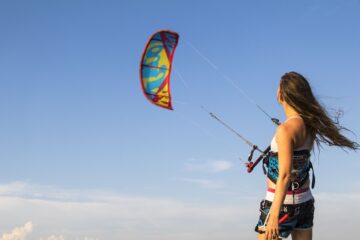
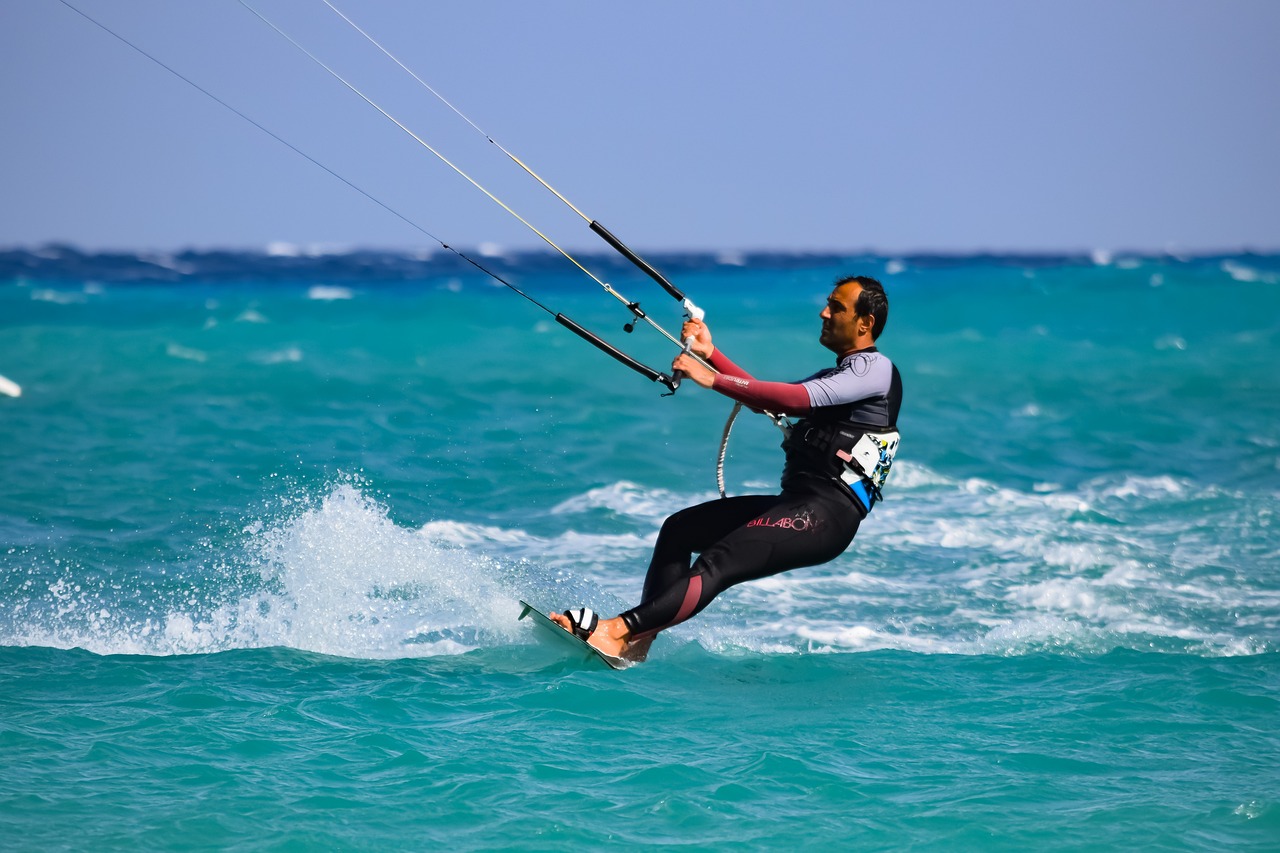
Kiteboarding puts a large inflatable kite on twenty-odd meters of line above and ahead of you, controlled through a bar, with your feet strapped onto a twin tip board. The kite generates an enormous amount of power and flies in a window that you learn to read over time. It’s fast, it jumps high, and it has thirty years of development behind it.
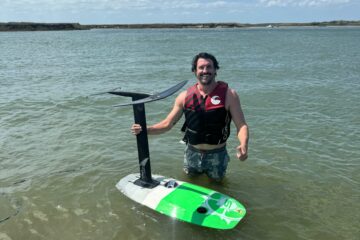
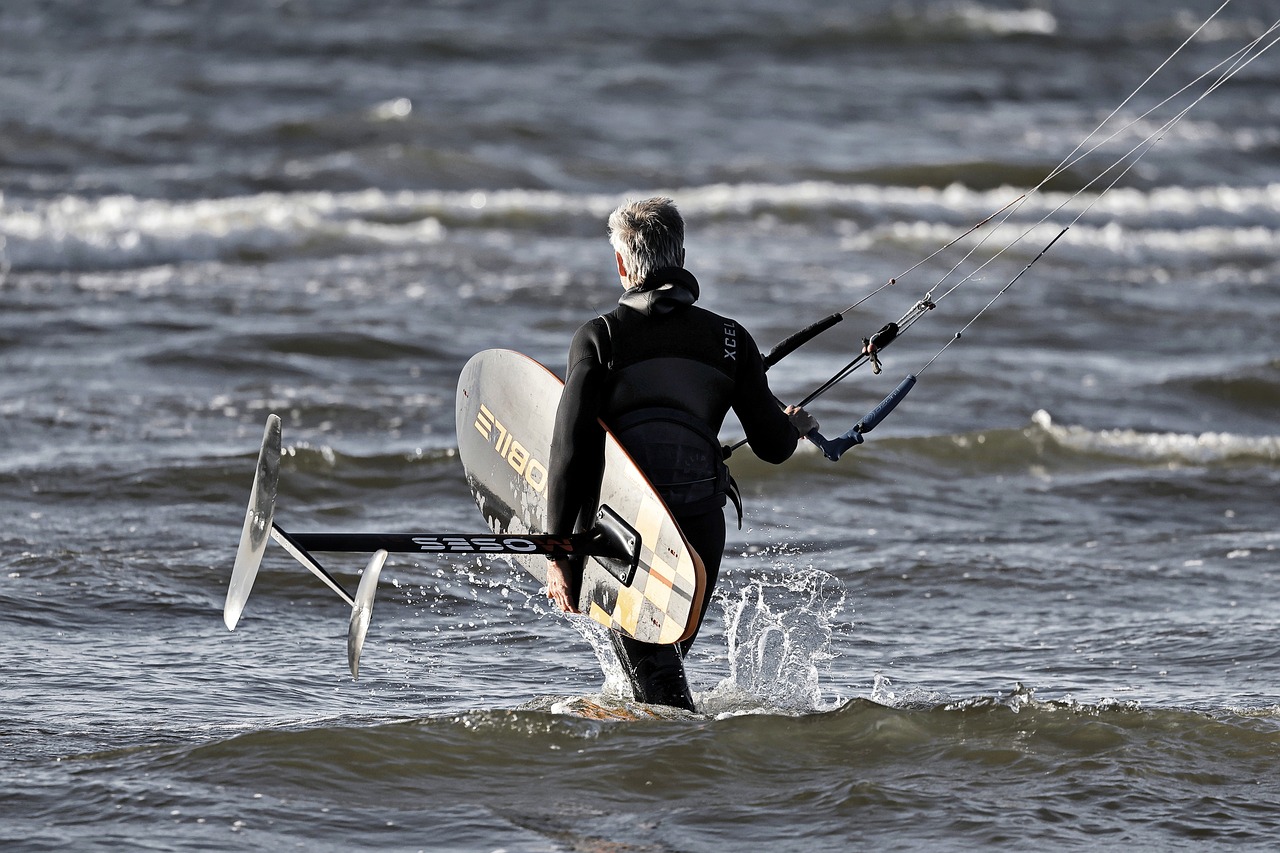
Wing foiling puts a handheld inflatable wing directly in your hands with no lines at all, and your feet on a board with a hydrofoil underneath. You use the wing for power and the foil to lift the board clear of the water. It’s quieter, slower and much newer.
From shore they look fairly similar. They feel almost nothing alike.
Which is easier to learn?
This is the question underneath the question, and the answer is slightly annoying: it depends which part you mean.
The wing is much easier than the kite. There are no lines to tangle, no launch window to misjudge, and no real risk of getting lofted. Most people are managing a wing on land within twenty minutes. Learning to fly a kite safely takes considerably longer, and it’s the part of kiteboarding that carries real consequence if you get it wrong.
The foil, on the other hand, is much harder than the board. A twin tip is forgiving, so you get up, you go, you fall, you get up again. A foil is an unstable platform that wants to either breach or stall, and it gives you very little margin in between. The first few hours on a foil are humbling for absolutely everyone, including people who have ridden other board sports their whole lives.
So wing foiling front-loads the easy part and back-loads the hard part, and kiteboarding does the opposite. The overall time to “I’m riding and enjoying myself” is roughly comparable either way, but the shape of the frustration is completely different.
The safety difference is real
I want to be direct about this because it genuinely matters.
A kite is powerful and it’s connected to you by lines. Almost everything that goes seriously wrong in kiteboarding involves the kite doing something unexpected while you’re attached to it, usually near land or other people. Modern safety systems are excellent and the sport is safe when it’s taught properly, but the failure modes carry consequence.
A wing has no lines, so if it goes wrong you simply let go. The worst realistic outcome on a wing is that you lose it and have to swim, or you hit the foil, which is why you wear a helmet and an impact vest and learn to fall away from your gear.
If you’re planning to learn on your own with no instructor, that difference is enormous and it argues strongly for winging. If you’re taking lessons either way it matters much less, because a good instructor removes most of the kite risk from your first few hours.
What each sport is better at
Kiteboarding wins on wind range at the top end, on speed, and on jumping. If you’ve watched kiteboarding videos and thought “I want to do that,” the thing you were watching was almost certainly a big air jump, and no wing is going to give you that. Kites also handle strong wind better once you’ve built the skill for it.
Wing foiling wins on light wind, setup time and travel. A foil lets you ride in conditions a kiter would sit out entirely, rigging is quicker because you just pump the wing and walk to the water, and the whole kit fits into one bag far more easily than a kite quiver does.
Wing foiling is also considerably gentler on the body. There’s less yanking, fewer hard impacts and much less load on the shoulders. I know several riders in their fifties and sixties who moved from kiting to winging and now ride more days per year than they used to.
My actual recommendation, by person
If you’re young and athletic and the thing that excited you was jumping, learn to kiteboard and go straight at it. Wing foiling isn’t going to scratch that particular itch.
If you’re over about 45, or you’re naturally cautious, or you’re protecting a shoulder or a back, start with winging. The lower impact and the absence of lines will serve you well.
If you mostly ride light wind days where you live, wing foiling is the obvious call. A foil in 12 knots is a genuinely good session, whereas a twin tip in 12 knots is a slog.
If you already ride a surfboard, snowboard or wakeboard, your board skills will transfer better to kiteboarding than to foiling, because the foil is its own thing that nothing else quite prepares you for. Kiting will feel faster in the first weekend.
And if you’re honestly not sure, do a lesson in each. That isn’t me trying to sell you two lessons. It’s that people find out very quickly which one they like, and the answer surprises them about a third of the time.
Does one help you learn the other?
Partly, yes.
If you go kite first, you learn to read wind, understand the power window and manage a board under load. That reading skill transfers straight across to the wing. Kiters who come to winging usually pick up the wing handling almost immediately, then spend all their frustration on the foil like everybody else.
If you go wing first, you learn wind awareness and, more importantly, you learn to foil. That’s the harder skill and it’s fully transferable, which is why wing foilers who move to kiting often get into kite foiling very quickly. The hard part is already behind them.
Neither order is wrong. The riders having the most fun around here mostly do both and pick based on what the day is offering.
Corpus Christi is unusually good for both
The shallow flat water of the Laguna Madre is the best foiling classroom I know of. When you fall off a foil in standing depth water you just stand up, whereas in deep water you’re swimming after a board that’s drifting downwind faster than you can chase it. That difference will save you hours over a learning curve.
The same water is what makes this a great place to learn to kite, because standing depth means more attempts per hour and you’re never fighting exhaustion on top of everything else.
The wind suits both too. The southeast sea breeze runs steadily through much of the year, averaging around 11 knots annually with much stronger spring days. That’s right in the range where a wing works beautifully, and strong enough on the good days for the kite.
How I teach each one
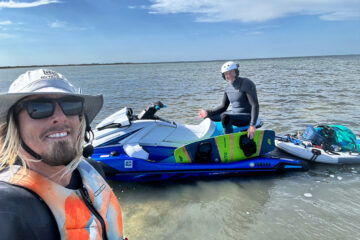
Both use the jet ski, which takes you out to the right water instead of whatever happens to be next to the parking lot. Both use Bluetooth helmets so I can talk to you while you’re riding rather than shouting from shore. Gear is included and it’s Cabrinha.
For the kite, the first session is mostly kite control on land and in shallow water, then body dragging, then the board. For the wing, we get you handling the wing on land quickly and then spend most of the time on a large board without the foil, before adding the foil once the wing has become second nature. Rushing the foil is the single most common way people make winging harder than it needs to be.
Common questions
Is wing foiling easier than kiteboarding?
The wing is much easier to handle than a kite, but the foil is much harder to ride than a twin tip board. Overall time to competence is similar. Winging has a gentler and safer start, and kiting has a gentler middle.
Should I learn kiteboarding or wing foiling first?
If you want jumping and speed, kiteboarding. If you want light wind sessions, lower impact, or a safer solo learning path, wing foiling. If you’re undecided, try one lesson in each.
Can I learn both?
Yes, and plenty of riders do. Skills transfer in both directions. Kiters pick up wing handling quickly, and wing foilers pick up kite foiling quickly.
Which needs more wind?
Kiteboarding on a twin tip. A wing on a foil gets going in noticeably lighter conditions, which is why it’s popular with people who live somewhere marginal.
Is wing foiling safer?
There are no lines and no lofting risk, so the serious failure modes are fewer. The foil itself is sharp, so you should wear a helmet and impact vest. With proper instruction both sports are safe.
Try both and decide for yourself
I teach kiteboarding, wing foiling and foiling out of Corpus Christi and North Padre Island, on water that suits all three. If you want to talk it through before booking, call or text me at (979) 665-5729 or email Jvkiteboarding@gmail.com and tell me a bit about yourself. I’ll tell you honestly which one I think you’ll enjoy more.
Or just book a lesson and find out on the water.
Related reading: why Laguna Madre is one of the best places in the country to learn to wing foil, and how long it actually takes to learn to kiteboard.