I’ve taught wing foiling in a few different places, and nothing I’ve ridden compares to what we’ve got on the bay side of Padre Island for learning this sport.
That’s a big claim, so let me back it up, because the reason is specific and it comes down to water depth.
Why the foil is the hard part
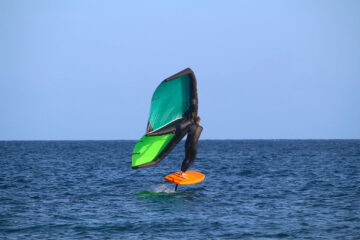
Wing foiling has two components. The wing in your hands is fairly straightforward, and most people are managing it competently within an hour. The foil under your board is the part that takes real time.
A hydrofoil is an unstable platform. Too much lift and it breaches, which throws you off the front. Too little and it stalls back down onto the water. The window between those two is narrow at first and it widens as you learn to feel it through your feet. There’s no shortcut here. You have to spend hours falling off.
So the question that determines how fast you learn is a simple one: when you fall off, what happens next?
What happens when you fall off in the Laguna Madre
You stand up. That’s it.
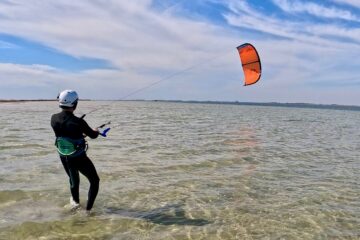
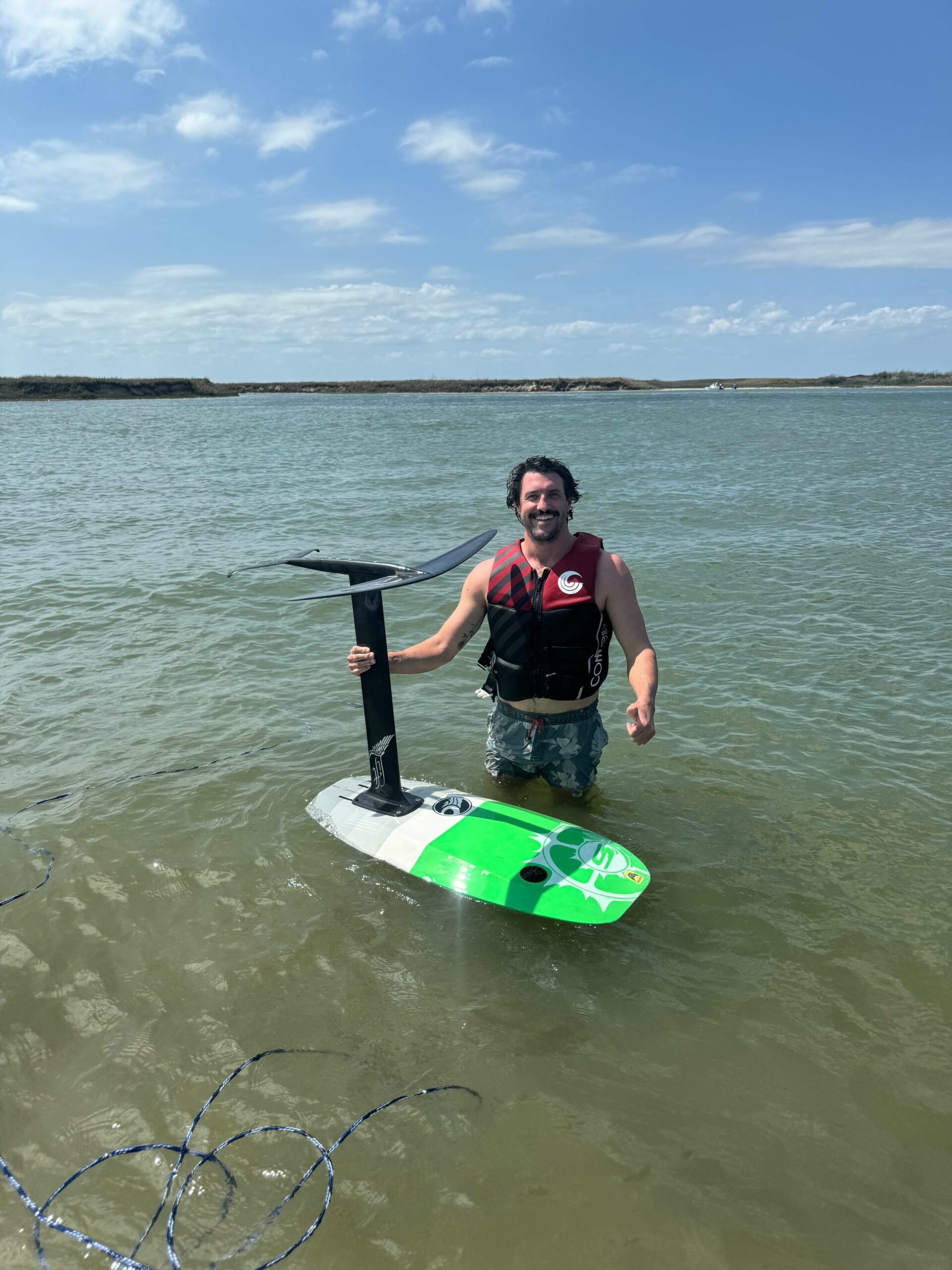
The Laguna Madre is a shallow hypersaline lagoon running down the inside of Padre Island, and huge sections of it are standing depth over a sandy bottom. Knee to waist deep, no rocks, no coral and no sudden drop-offs.
Compare that to a normal foiling session in deep water. You fall, and now your board is drifting downwind on the foil, your wing is doing its own thing, and you’re swimming after both while the current does what current does. Even if you handle it well, that’s a couple of minutes of recovery per fall. Do it thirty times in a session and you’ve spent an hour swimming.
In standing depth water you fall, plant your feet, grab the board and reset in about fifteen seconds. That’s the whole argument. Over a three hour lesson it’s the difference between forty attempts and a hundred and twenty.
There’s also a psychological piece that I think matters just as much. A hydrofoil is intimidating, with a sharp mast and wings and a habit of moving in ways that feel unpredictable. Most beginners are quietly nervous about it, and nervous people ride stiff. In water they can stand up in, that nervousness drops away far faster.

The wind here suits winging particularly well
Corpus Christi averages around 11 knots out of the east-southeast across the year. April is the windiest month with averages just over 14 mph, and the southeast sea breeze is a reliable daily pattern for much of the year.
That’s close to perfect for a wing, and here’s why. A foil gets going in much lighter wind than a twin tip kiteboard does, so days that a kiter looks at and shrugs are days a winger rides happily. Our long stretches of steady moderate wind, which are merely acceptable for kiting, are excellent for winging.
Summer is a good example of this. From June through August the wind is lighter and softer than spring and it comes in as a dependable afternoon sea breeze. For learning to wing foil that’s close to ideal, with enough power to get up on foil but not so much that everything happens too fast to process.
Space, and the absence of people
The Laguna is big. On a weekday you can have an enormous area of flat water essentially to yourself.
This matters more for winging than people realize, because early foiling involves a lot of unintended direction changes. You go where the foil takes you, which in a crowded spot is stressful and occasionally dangerous. Out on the flats there’s nothing to hit and nobody to hit.
Flat water and clean lift
Chop is the enemy of a foil. Every bump disturbs the water flowing over the wing and makes the ride twitchy, which is exactly what a beginner doesn’t need while they’re still learning what neutral feels like.
The Laguna on a clean southeast day is glassy in places. The foil gets undisturbed water, the lift is smooth, and you can actually feel what your feet are doing. That feedback is how you learn.
It’s also why experienced foilers like it here, because clean lift is clean lift whether you’re on hour three or year three.
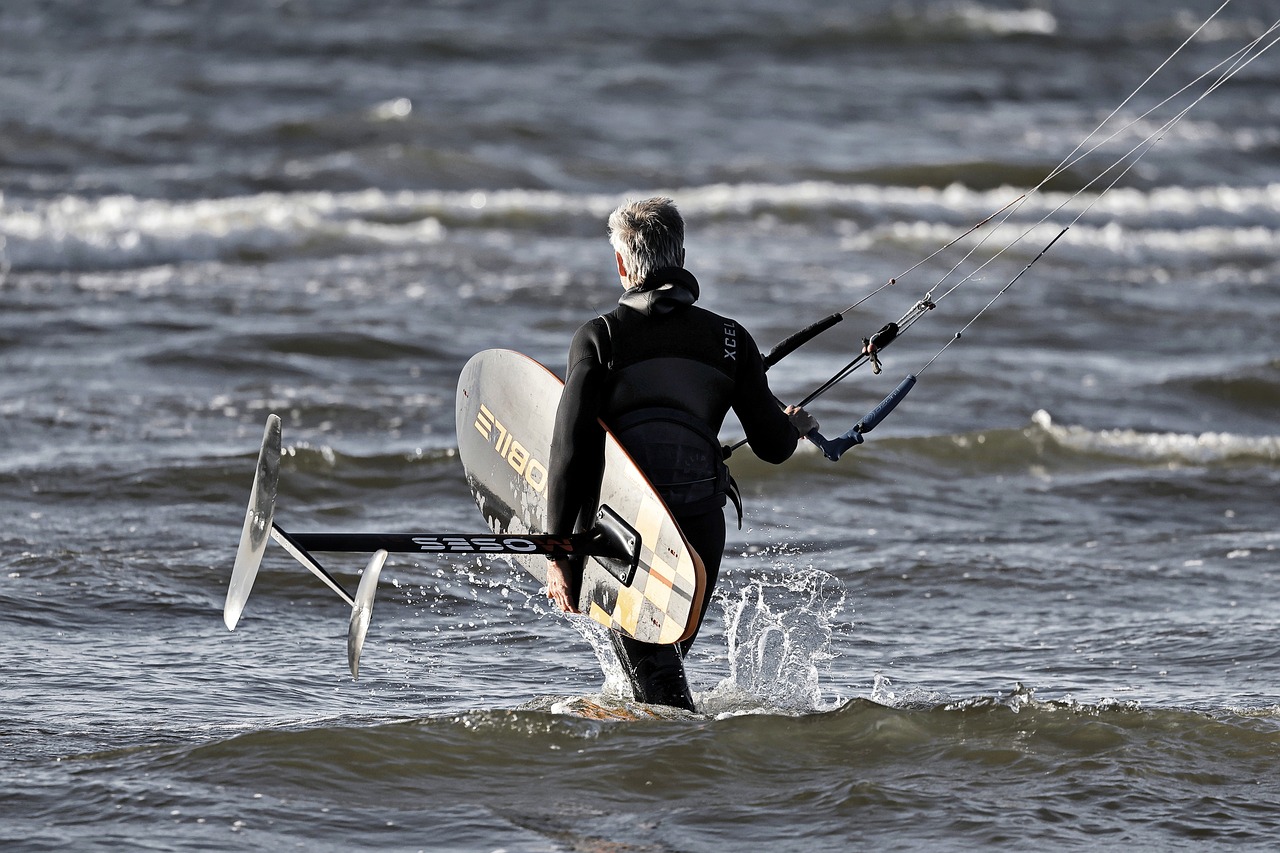
How I teach wing foiling
The sequence matters more in this sport than in most, and the most common way people make it harder than it needs to be is rushing to get on the foil.
We start with the wing on land, where you learn to hold it, power it, depower it and move it through the window until it’s boring. That takes less time than most people expect.
Then the wing goes on the water with a large stable board and either no foil or a very small one, depending on the person. You learn to get up, get going, turn and come back, and by the end of that the wing is genuinely automatic, which is the entire point.
Only then does the foil go on. Because your hands already know what they’re doing, you can put all of your attention into your feet, which is where foiling actually lives.
Two things speed this up further. We use a jet ski to put you in the right water rather than whatever’s next to the parking lot, and to bring you back upwind. And the helmets have Bluetooth, so I can coach you in real time while you’re riding. On a foil that’s worth a lot, because the corrections are tiny and the window to make them is about half a second. Hearing “back foot, ease off” while it’s happening is a completely different experience from hearing it on the beach afterwards.
All gear is included, so just bring a swimsuit.
Who wing foiling suits
Wing foiling tends to suit a few particular kinds of riders.
If you ride mostly light wind days, a foil will get you going when a twin tip won’t, and that’s the single biggest reason people come to me asking about it.
It’s also much easier on your body. You get far less shock loading than in kiteboarding, considerably less strain on the shoulders, and softer landings all round. I know plenty of riders past forty who switched over and now spend more days on the water than they did in their kiting years.
The kit is simpler too. You pump up the wing, walk down to the water and go. There are no lines to untangle and nobody needed to help you launch or land, which also makes independent practice safer once you’ve got the fundamentals from a lesson.
And if you’re already a kiteboarder looking for a new project, the wing will take you almost no time at all, so you get to spend all your effort on the foil, which is the fun part anyway.
Common questions
Is Corpus Christi good for wing foiling?
It’s one of the best places I know of to learn. The shallow standing depth flats of the Laguna Madre mean you stand up after every fall instead of swimming, and the steady southeast sea breeze sits right in the range where a foil performs well.
How long does it take to learn wing foiling?
Managing the wing takes a few hours. Riding on foil consistently usually takes several sessions beyond that. Learning in standing depth water speeds this up substantially, because you get far more attempts per hour.
Do I need kiteboarding experience to wing foil?
No. Plenty of people start with winging and never kite at all. Existing wind experience helps but it isn’t required.
How much wind do you need to wing foil?
Less than kiteboarding on a twin tip. A foil gets going in noticeably lighter conditions, which is why winging works well here through the lighter summer months.
Is wing foiling dangerous?
The main hazard is the foil itself, which is why you wear a helmet and an impact vest and learn to fall away from your gear. There are no lines, so there’s no lofting risk. With instruction it’s a very manageable sport.
Is gear included in a lesson?
Yes. Wing, board, foil, helmet and impact vest are all provided.
Get on foil
If you want to try this on water that’s actually built for learning it, have a look at the wing foil lessons or the foil lessons, or book a session directly.
Questions first is absolutely fine. Call or text (979) 665-5729 or email Jvkiteboarding@gmail.com and tell me your background, and I’ll tell you what to expect.
Still deciding between sports? Read wing foiling versus kiteboarding. Planning a trip? The wind season guide covers the best months to come.