Everybody wants a number, and I understand why. You’re trying to work out whether to book two lessons or six, whether to take a week off work, and whether this is a weekend hobby or a full project.
So here’s my number, and then here’s why the number is complicated. Most people I teach are getting short rides somewhere between six and nine hours of instruction. Riding consistently in both directions and staying upwind usually lands at around twelve hours. That’s faster than the sport’s general reputation, and I’ll explain what accounts for the difference.
What the stages actually are
Learning to kiteboard isn’t one skill, it’s four, and they arrive in order.
Stage one: flying the kite
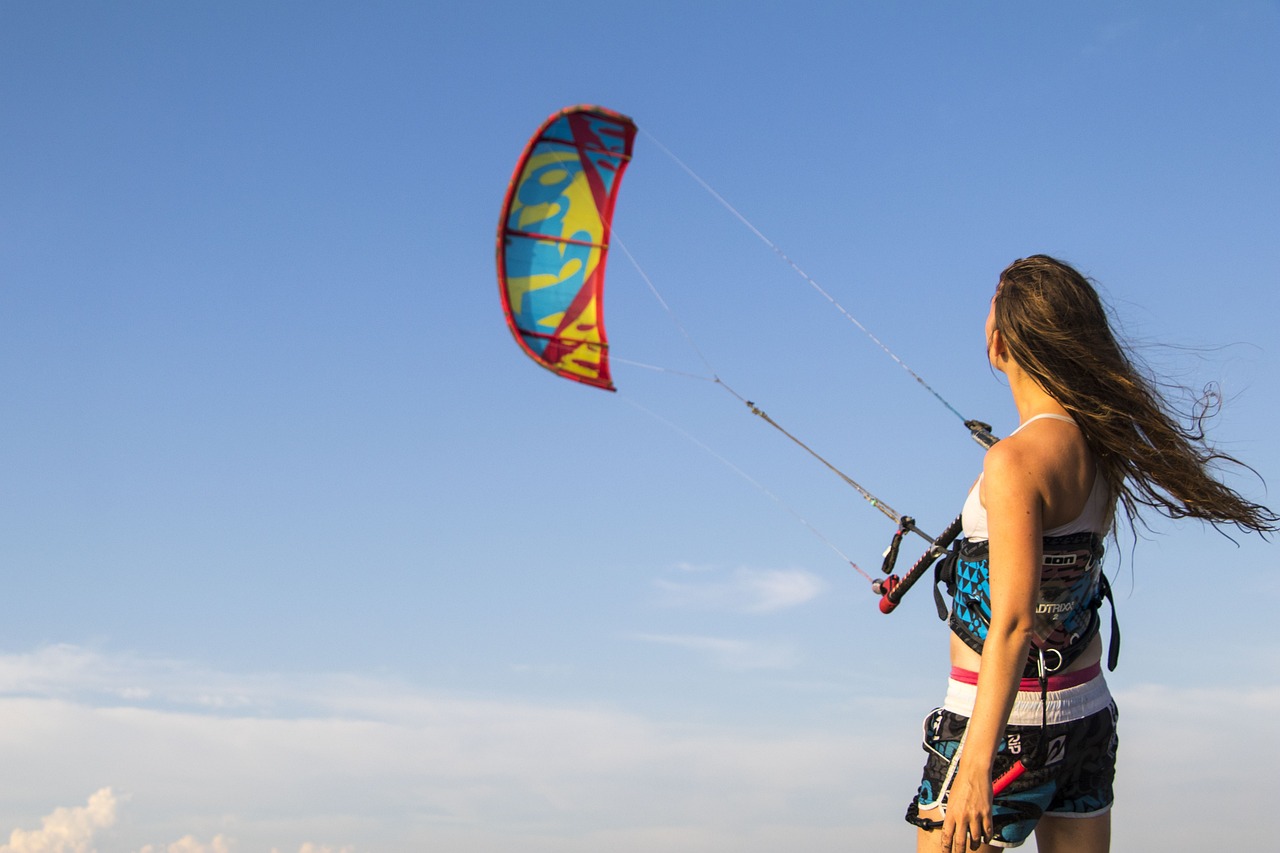
Before you touch a board you have to be able to fly the kite without thinking about it. That means knowing where the power sits in the window, how to steer it, how to park it, how to depower it, and how to activate the safety release and what happens when you do.
This is usually the first two to three hours. Some people take longer, and the ones who take longer are almost always the ones trying to skip ahead. Don’t skip ahead. Every problem later in the process traces back to weak kite control.
Stage two: body dragging
You go in the water with the kite and no board, and you learn to use the kite to pull yourself around. Then you learn to body drag upwind, which is how you retrieve a board you’ve lost.
This usually takes one to two hours. It’s boring for about half of that and then it clicks. Nobody enjoys this stage and everybody needs it.
Stage three: the water start
Board on your feet, kite dives, and you come up out of the water and ride. This is the stage everybody imagines when they think about learning, and it’s where the frustration tends to concentrate.
The water start is a coordination problem rather than a strength problem. Most people fail it by standing up too early, straightening the back leg, or oversteering the kite. All three are fixable in seconds if somebody tells you at the right moment, and nearly impossible to diagnose yourself.
Typically this takes two to four hours across the stage, and it’s where a good instructor saves you the most time.
Stage four: riding upwind
Getting up isn’t the finish line. If you can’t ride upwind then every session ends with a long walk back up the beach and your actual riding time collapses.
Upwind riding is mostly edge control and patience, and it usually takes another two to four hours. It tends to arrive suddenly rather than gradually. One session you’re drifting downwind, the next you’re holding your position, and you won’t be able to say exactly what changed.
At that point you can ride independently, and everything after that is progression rather than learning.
What makes some people faster
A board sport background helps, though less than people expect. Snowboarders, wakeboarders and surfers usually skip some of the water start awkwardness because the edge control concept is already familiar, but it doesn’t help much at the kite flying stage, which is really its own thing.
Consecutive days help a lot. Three days in a row beats six weekends, because the kite flying muscle memory decays fast in the first week. If you can arrange a compressed learning block, do it.
Fitness helps mainly through endurance rather than strength. You don’t need to be strong, because the harness takes the load rather than your arms. But you do need to keep going for a couple of hours, since fatigue is where technique falls apart.
Being relaxed helps enormously, and it’s the single biggest predictor I see. Tense people grip the bar, lock their arms, hold their breath and fight the kite. Relaxed people let the kite do the work. Warm shallow water helps with this, which is part of why people progress well here.
What slows people down
Learning in deep water is the big one, because every crash becomes a swim, a recovery and a rest, and your attempts per hour drop by more than half.
Walking upwind between attempts is the next. On a normal beach lesson you spend a big share of your time walking, and that time isn’t learning time.
Getting no feedback in the moment costs you more than people realize. If your instructor is on the beach and you’re sixty yards out, they can’t tell you the thing you need to hear when you need to hear it. You find out five minutes later, after you’ve repeated the mistake fifteen times and burned it in properly.
Trying to learn from a friend is another one, and I say this with genuine affection for your friend. Being able to ride and being able to teach are unrelated skills, and self-taught progressions tend to have gaps in exactly the safety areas that matter most.
And finally, wind that’s too strong. Overpowered beginners learn fear rather than technique.
Why my students tend to be faster than average
Three things account for most of the difference here, and none of them are about me being a better talker.
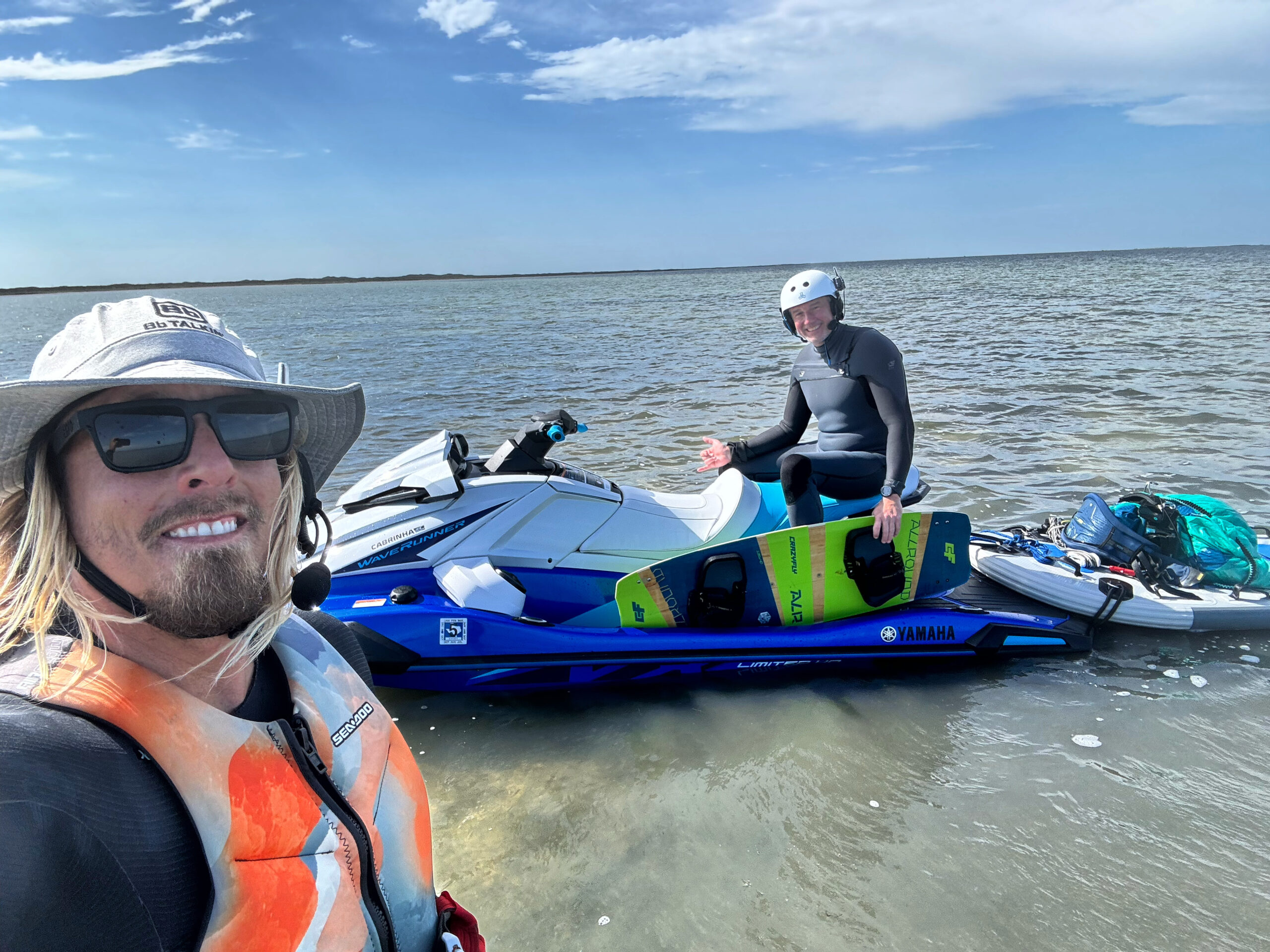
The first is the water. We ride the Laguna Madre, where large areas are standing depth over a sandy bottom, so when you fall you just stand up. That single fact roughly doubles the number of attempts you get per hour compared to a deep water spot, and attempts are the currency of learning.
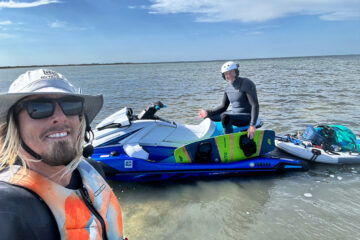
The second is the jet ski. We take you out to the right water rather than whatever happens to be next to the parking lot, and we bring you back upwind between runs, so you’re not walking. Over a three hour lesson that’s easily an extra hour of actual riding.
The third is the Bluetooth helmets. I can talk to you while you’re on the board, in a normal voice, in real time. When your back leg goes straight you hear about it in that second rather than after the run. Most beginner errors are two-second fixes that are completely invisible from the inside, and closing that feedback loop is the biggest teaching improvement I’ve made in years.
None of it is magic. It just removes the three biggest sources of wasted time.
How to plan your lessons
If you’re local, book three sessions reasonably close together rather than spreading them across two months. You’ll spend less total time and less total money.
If you’re traveling, plan four days minimum. That gives you room for one blown out day and still leaves three teaching days, which for most people is enough to be riding by the end.
If you’re on a tight budget, don’t buy gear until you can ride upwind. Beginners who buy early almost always end up with the wrong kite size for their local conditions and sell it at a loss.
Common questions
How long does it take to learn to kiteboard?
Most people get short rides between six and nine hours of instruction and are riding consistently and staying upwind at around twelve hours. Progress depends on the water you learn in, how close together your lessons are, and how relaxed you can stay.
How many kiteboarding lessons do I need?
Typically three to four sessions to get riding, and a couple more to be genuinely independent. Booking them close together shortens the total.
Can I learn to kiteboard in a weekend?
Some people get short rides in a weekend, especially with good conditions and back to back sessions. Being fully independent in a weekend is uncommon, so plan for more if you can.
Do I need to be strong or fit to kiteboard?
No unusual strength is needed, because the harness carries the load rather than your arms. Basic endurance helps, since technique degrades as you get tired.
Is it worth taking lessons instead of learning from a friend?
Yes. Lessons are faster and safer, and self-taught riders commonly have gaps in exactly the safety skills that matter most. Kite control and self rescue aren’t things to guess at.
What should I bring to a lesson?
A swimsuit, sunscreen, water, and something to eat afterwards. All equipment is provided.
Book your first session
If you want a straight answer about how many sessions you personally are likely to need, call or text me at (979) 665-5729 or email Jvkiteboarding@gmail.com. Tell me your age, whether you’ve done any board sports, and how many days you have available, and I’ll give you a realistic plan rather than a sales pitch.
Otherwise, have a look at the lesson options or book directly.
Related: why Corpus Christi is a good place to learn, and the best months to book.