The question I get more than any other, usually by text, usually from somebody in Denver or Chicago planning a trip, is simple enough: when should I come?
The short answer is spring. The longer answer is that Corpus Christi has usable wind for most of the year, and the right month for you depends on whether you’re learning, chasing big days, or trying to combine riding with warm water and a family holiday. Here’s how the year actually plays out on this coast.
Why it is windy here at all
Corpus Christi sits in a spot where the pressure gradient does a lot of the work for us. High pressure parks over the Gulf or the southeastern United States, low pressure develops out over the Plains, and the air moving between the two funnels right across the Coastal Bend. Because air circulates clockwise around high pressure, what we end up with is a persistent southeast flow straight off the Gulf.
That’s the engine. It runs hardest in spring when those Plains lows are at their strongest, and it eases off in the deep heat of summer. In fall and winter a different mechanism takes over, as cold fronts sweep down from the north and give us wind from the opposite direction for a day or two at a time.
Annual average wind here runs around 11 knots out of the east-southeast, with gusts commonly into the low twenties. That average hides an enormous amount of variation, which is really the whole reason this article exists.
March through May: the season
April is the windiest month of the year in Corpus Christi, with average wind speeds just over 14 mph and gusts that regularly climb past 40. March and May bracket it closely on either side.
If you’re planning a trip around riding and nothing else, come in spring. You’ll get the most consecutive windy days, the most predictable southeast direction, and water that’s warmed up enough that you’re comfortable in a shorty or boardshorts by the middle of April.
There’s a local trick worth knowing here. When the forecast shows severe weather risk up in North Texas and the Plains, we usually get strong wind in the day or two beforehand, because those storms pull moisture north and the wind carrying it crosses us first. So if you see tornado watches in Oklahoma on the news, go and check your kite quiver.
The tradeoff in spring is that it can genuinely be too much of a good thing. There are April afternoons where the sensible move is to sit on the beach and watch. If you’re a beginner arriving in April, book a morning lesson, because wind on this coast builds through the day and ten in the morning is often the sweet spot when the afternoon is heading for 25 knots.
June through August: warm, steady, and a bit lighter
Summer here isn’t the wind desert that people from other coasts tend to expect. The southeast sea breeze keeps working, it’s just softer and more of an afternoon pattern than an all day one.
Direction is dependably southeast and the water is bath warm. You’ll be riding in boardshorts and probably wishing the water were a few degrees cooler by the time August comes around.
What summer is really good for is learning. Lighter, steadier wind is a much better teacher than big wind, and when you’re still figuring out how to fly a kite, body drag and get up on the board, 12 to 16 knots is far friendlier than 25. I teach a lot of first-timers in June and July for exactly that reason, and the progression is often faster than it is in the middle of spring when everybody is overpowered.
You do need to plan around the heat, though. Morning and late afternoon sessions beat standing on a gravel lot at two in the afternoon in July. It’s also hurricane season from June onward, which mostly means keeping an eye on the tropics if you’re booking a long way out rather than avoiding the coast altogether.
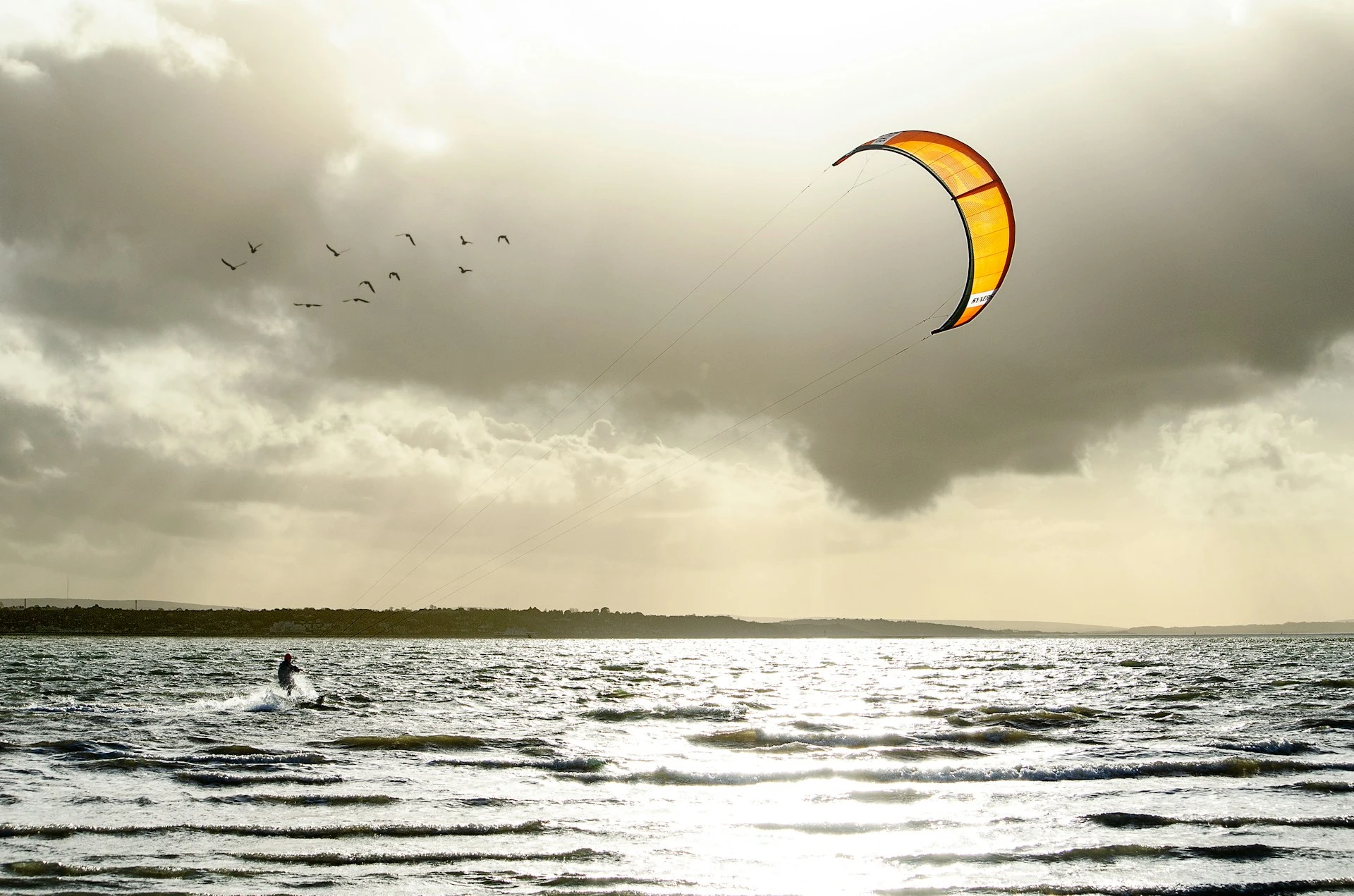
September through November: the underrated stretch
I think fall is the most underrated time to ride here, and I’ll happily argue about it with anyone.
The first proper cold fronts start arriving in October, and each one delivers a day or two of strong north wind before the flow clocks back around to southeast as the front pushes past. So you get variety, and you get some of the punchiest wind of the year without the crowds that spring brings with it.
Water stays warm well into November, the summer heat has finally broken, and there are noticeably fewer people on the water. If you’re an intermediate or better rider looking for a quiet trip with good conditions, September and October are excellent.
The catch is that north wind blows offshore at some of our launches, including parts of Bird Island Basin. Frontal days need more thought about where you put in, so this is a good stretch to ride with somebody who knows the local geography, or at the very least to check with a local before you pick a spot.
December through February: for the committed
Winter riding here is real and plenty of people do it. Fronts come through more often, so the north wind days are frequent, and between fronts you get mild southeast days that can be genuinely lovely.
Air temperature can drop into the 40s and 50s behind a front and the water cools down accordingly, so you’ll want a wetsuit. A 3/2 handles most of it, and on the coldest days you’ll want boots and possibly a hood as well.
What winter has going for it is emptiness. You can have an entire flat to yourself in January, which is worth something. What it has going against it is unpredictability, so if you’re flying in from out of state for three days in the middle of January you’re taking a gamble. Give yourself a week if you possibly can.
Beginners in winter are certainly possible, but I’d rather teach you in October or June. Cold makes people tense up, and tension is the enemy of learning to fly a kite.
So when should you actually come?
If you want the most wind, come in April. If you want to learn efficiently, come between May and early July, or in September and October. If you want empty water and you don’t mind a wetsuit, come in winter and stay long enough to catch a good front.
If you can only make one trip and you want to hedge your bets, I’d pick late September or early October. You get warm water, thinning crowds, and the first fronts starting to fire.
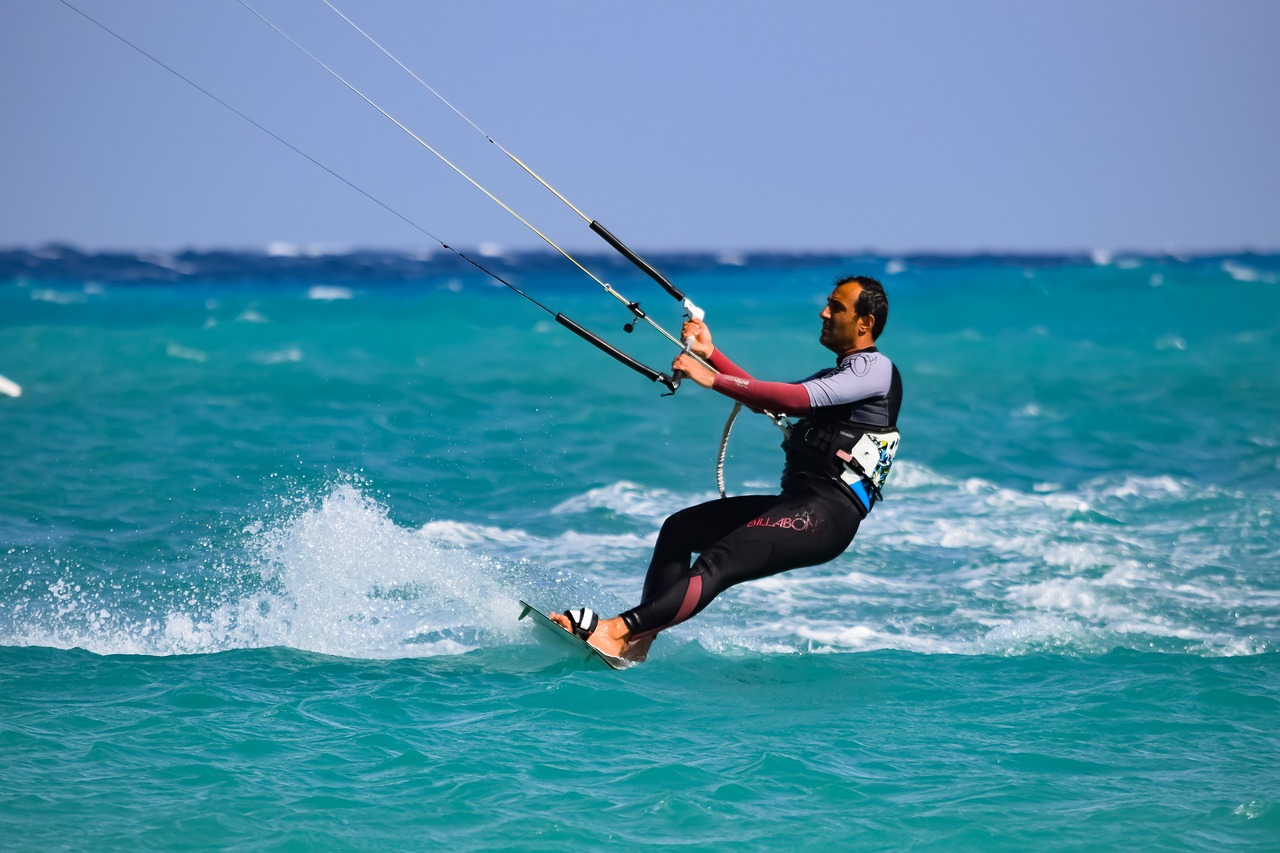
What to bring, by season
In spring, bring your smaller kites. If you normally ride a 12, bring a 9 and a 7 as well, plus boardshorts or a shorty.
In summer, bring a bigger kite than you think you’ll need. A 12 and a 14 will see plenty of use, along with boardshorts, a rash guard and serious sun protection.
In fall, bring a spread. Frontal days want small kites and the days in between want mid range, so pack for both. A shorty or 2mm is usually enough.
In winter, bring a 3/2 wetsuit as a minimum, along with boots and a range of kite sizes, because the swings between days are wide.
If you’re traveling and would rather not haul gear across the country, all of our lessons include Cabrinha equipment, so you can turn up with a swimsuit and be on the water.
Common questions
What is the windiest month in Corpus Christi?
April, with average wind speeds just over 14 mph and gusts frequently above 40 mph. March and May are close behind.
Can you kiteboard in Corpus Christi year round?
Yes. There’s usable wind in every month of the year. Spring is the most consistent, winter is the least predictable and needs a wetsuit, and summer is lighter but very steady.
What direction does the wind usually come from in Corpus Christi?
Southeast for most of the year, driven by the sea breeze off the Gulf. After a cold front in fall and winter it swings around to the north for a day or two before clocking back.
Do I need a wetsuit to kiteboard in Corpus Christi?
Not from roughly April through November. In the winter months a 3/2 is a good idea, along with boots on the colder days behind a front.
What is the best month for a beginner to take kiteboarding lessons here?
May through July, or September and October. The wind in those months is steady enough to learn on without being overpowering, and the water is warm.
Plan your trip around a lesson
I teach year round out of Corpus Christi, Port Aransas and North Padre Island, and I’m happy to help you pick your dates. If you tell me what you want out of the trip, I can tell you honestly which month suits it best.
Have a look at the kiteboarding lessons or the wing foil lessons, or go ahead and book a session. Call or text me at (979) 665-5729 with any questions, or email Jvkiteboarding@gmail.com.
Once you’ve picked your dates, the guide to local kiteboarding spots will help you work out where to ride, and the Bird Island Basin guide covers the flagship flat water spot in detail.