If you ask ten riders around Corpus Christi where a visitor should go first, most of them will say Bird Island Basin. I’ve been teaching and riding on this stretch of the Laguna Madre for years and I still think it’s one of the best flat water spots in the country. It’s also a place where people show up unprepared and burn half a day working out the basics, which is a shame when the riding is this good.
So this is the guide I wish someone had handed me the first time I drove out there.
Where Bird Island Basin actually is
Bird Island Basin sits inside Padre Island National Seashore, on the bay side of the island. You drive south from Corpus Christi over the JFK Causeway and keep going past the last of the condos and beach houses until the development simply stops. That’s the park boundary. The turnoff for Bird Island is a few miles further in, on your right.
The drive matters because it sets your expectations. This isn’t a spot with a bar, a rental shop and a parking attendant. You get a gravel lot, some vault toilets, a picnic shelter and an enormous amount of shallow water. The National Park Service runs it, Worldwinds Windsurfing operates the concession on site, and beyond that you’re on your own. That’s exactly why it’s good.
The water is the whole point
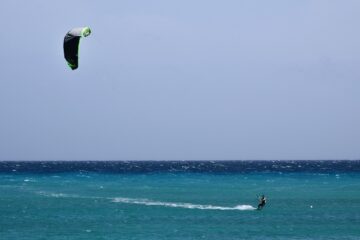
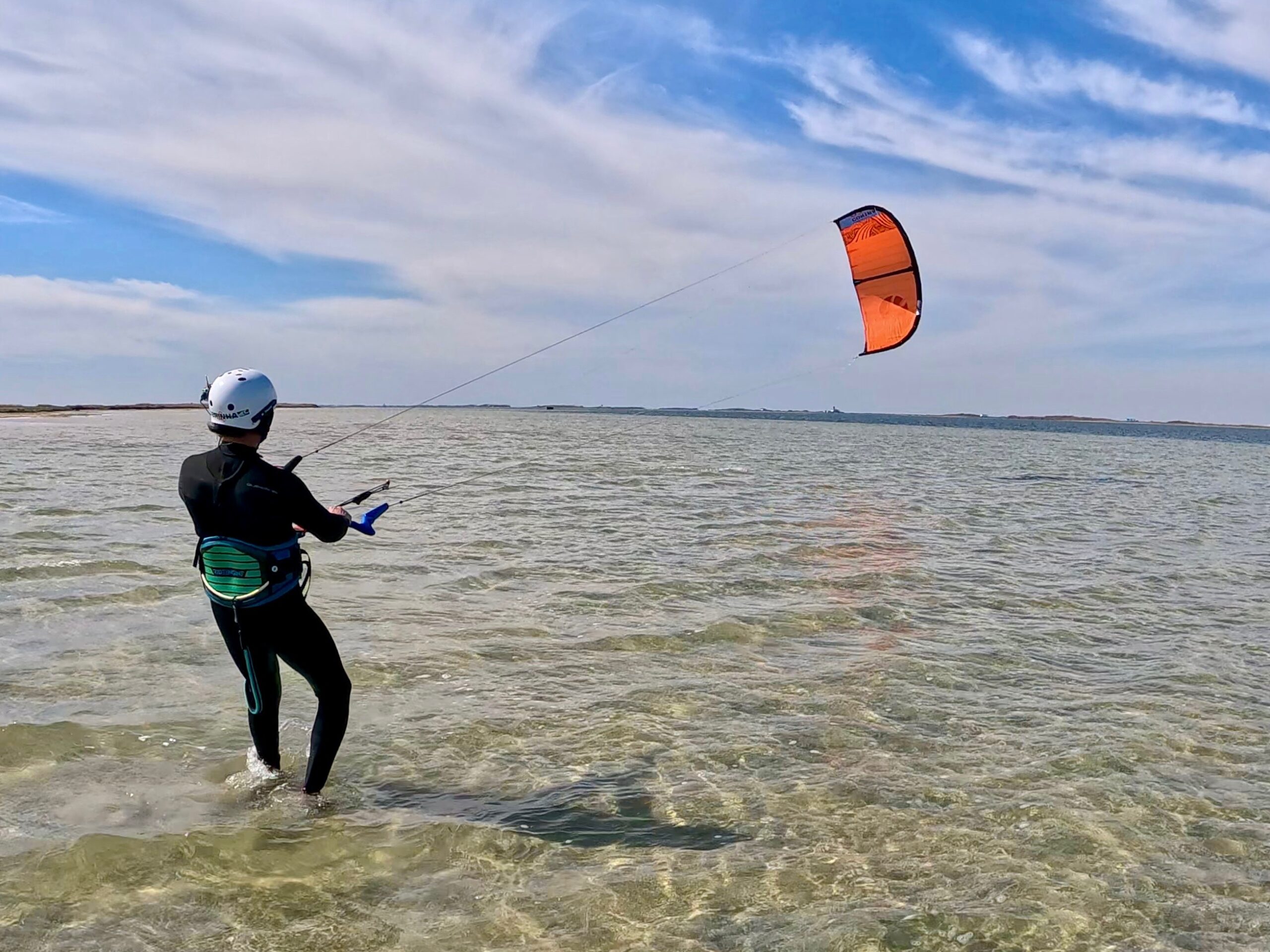
The Laguna Madre is a hypersaline lagoon, which is a technical way of saying it’s shallow, warm and very salty. On the flats at Bird Island you can walk out a long way and still be standing in water somewhere between knee and waist deep, with a sandy bottom under you the entire time.
For a beginner this is about as good as it gets. When you crash, and you’re going to crash a lot, you just stand up. You’re not treading water while your kite sits inverted forty yards downwind, and you’re not getting worked by shorebreak. You put your feet down, sort your lines out and go again. I’ve taught people who were genuinely nervous about deep water and they did fine here, because the fear never really got a chance to take hold.
For experienced riders the appeal is different. Flat water with consistent wind is where you learn tricks, because there’s no chop punishing your landings. If you’ve been trying to get an unhooked pass dialed in and you keep coming up short because the surface is bumpy, come and ride the Laguna on a clean southeast day and see what happens.

Which wind directions work
Southeast is the bread and butter here. It’s the prevailing direction on this coast for most of the year, and at Bird Island it arrives cross-onshore on the main flats. That’s the safest configuration you can ask for, because if something goes wrong the wind pushes you back toward land rather than out into the bay.
East works well, southeast works well, and south works too, though it gets a little more side-shore depending on where exactly you set up along the shoreline.
North is the one to think carefully about. After a front passes through in the fall and winter the wind swings around and blows offshore at parts of the basin, and offshore wind is how riders end up a long way from where they started with no easy way back. If you’re newer, sit out the north days or ride with somebody who knows the spot. If you’re experienced and you’re going anyway, tell someone where you’ll be and don’t ride alone.
Practical things that will save you time
There’s an entrance fee for Padre Island National Seashore at the gate. If you’re going to ride here more than a couple of times a year, buy the annual pass, because it pays for itself quickly and you skip the line. Rates change from time to time, so check the current numbers on the Park Service site rather than trusting whatever a forum post from 2019 told you.
Parking is a gravel lot and it fills up on good spring weekends. If you turn up at noon on a Saturday in April with a fifteen knot forecast, expect company. Getting there earlier isn’t only about parking, either. Wind on this coast tends to build through the afternoon, so arriving mid morning gives you time to rig and be ready when it fills in properly.
There’s no drinking water out there and almost no shade. The picnic shelter is real but it’s small and it isn’t going to cover everybody. Bring more water than you think you need, bring sunscreen, and bring something with a brim. The sun reflects off that shallow water straight back up at you, and people get burned in places they weren’t expecting.
Cell service is patchy, so don’t count on pulling up a wind app once you’re in the parking lot. Check before you leave pavement.
The primitive campground next to the basin has no hookups at all. If you want to camp and ride for a few days that’s the setup, and plenty of people do it happily, but go in knowing it really is primitive.
Where beginners should stay, and where they should not
If you’re learning, stay on the flats close in. There’s a large area of standing depth water and you’ve got no reason to leave it. The temptation, once you’ve strung a few good runs together, is to head out toward the deeper channel because the water looks cleaner out there. Resist that for a while. The whole value of standing depth is that it lets you fail cheaply, and you want to keep failing cheaply until your water relaunch is genuinely reliable.
Watch out for the boat channel. Bird Island has a separate ramp about five minutes away and there’s motorboat traffic in the marked channel, which is not something you want to discover with a kite in the air. Know where the channel is before you launch, not afterwards.
The other thing that catches people out every single session is downwind drift. The basin is big and forgiving right up until you’ve drifted a mile and realize the walk back is through soft mud and seagrass in the full sun. Reset upwind more often than feels necessary and you’ll thank yourself later.
How we teach here
I run lessons a bit differently from the standard beach setup, and Bird Island is part of the reason why.
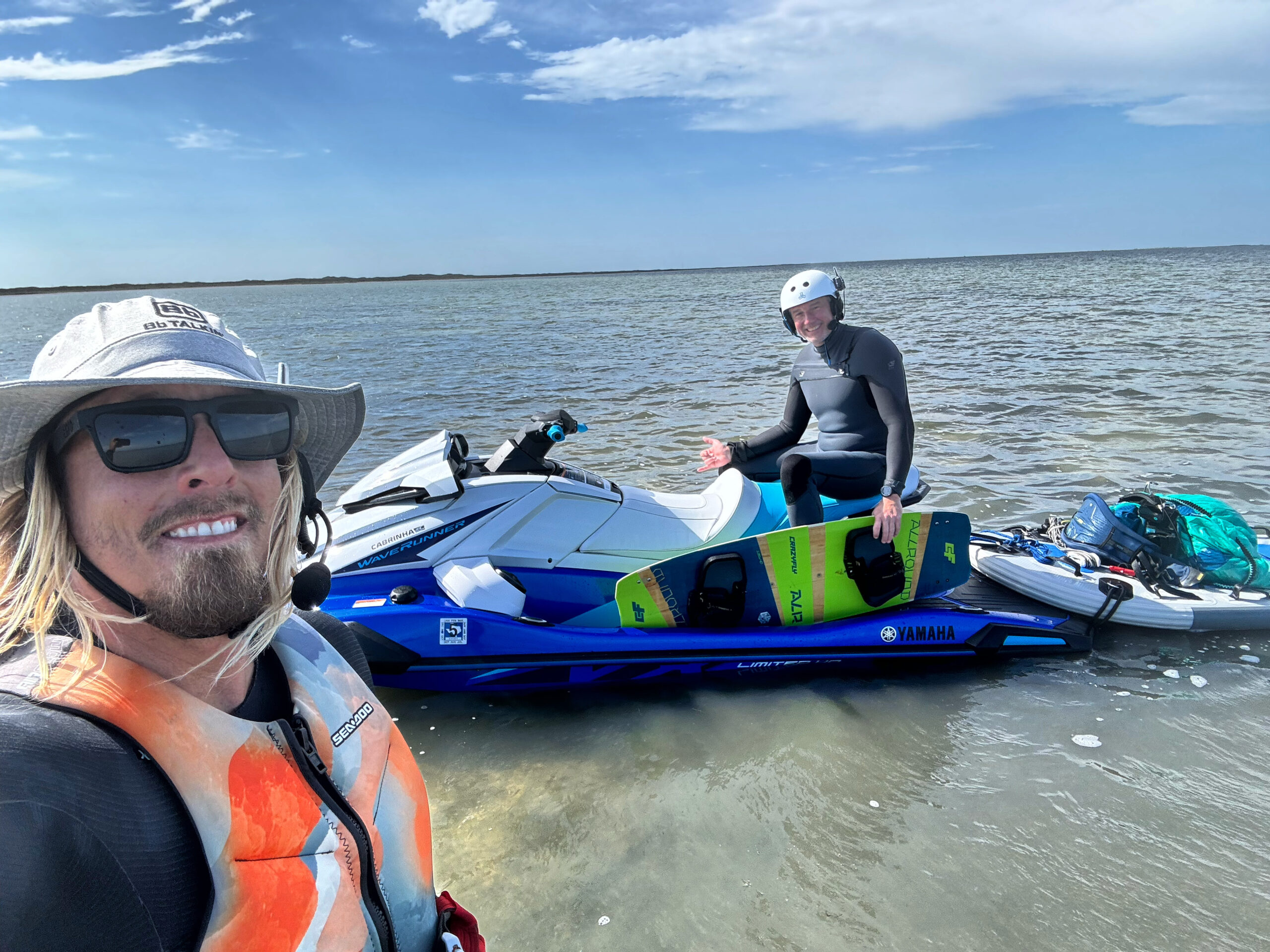
We use a jet ski to take students out to shallow water away from the busy launch area, which does two useful things. It removes the pressure of learning in front of an audience, and that matters more than most people will admit. It also means you spend your lesson riding instead of walking upwind, and an hour of actual water time is worth more than three hours of trudging.
Our helmets have Bluetooth in them, so I can talk to you while you’re out there riding. Not shout from the beach and hope the wind carries it, but actually talk to you in a normal voice at the exact moment you need the correction. If your back leg is locked straight and that’s why you keep sinking, you’ll hear about it in the second it’s happening rather than five minutes later on the beach, by which point the muscle memory has already set wrong.
Gear is included and it’s Cabrinha, so you’re not learning on somebody’s beaten up 2014 kite with a patched bladder.
Is Bird Island the right spot for your first day?
For most people, yes. The combination of a shallow sandy bottom, prevailing cross-onshore wind and enough room to make mistakes is hard to beat anywhere on the Gulf Coast.
The exceptions are busy holiday weekends and north wind days after a front. On days like that I’ll often take students to a more sheltered spot instead. Part of what you’re paying for with a local instructor is somebody who checks the forecast and picks the right water for that particular afternoon, rather than defaulting to the same launch every time regardless of conditions.
Common questions
Do I need a park pass to kiteboard at Bird Island Basin?
Yes, there’s an entrance fee for Padre Island National Seashore. An annual pass makes sense if you’re planning to ride here regularly, and you can check current rates on the Park Service site.
How deep is the water at Bird Island Basin?
Much of the riding area on the flats is standing depth, roughly knee to waist deep, over a sandy bottom. It gets deeper as you move toward the channel and out into the Laguna.
What wind direction is best for kiteboarding at Bird Island Basin?
Southeast is the prevailing and most reliable direction, and it comes in cross-onshore. East and south both work well too. North wind after a cold front blows offshore in places and isn’t a good choice for less experienced riders.
Can beginners learn to kiteboard at Bird Island Basin?
It’s one of the better beginner spots in Texas thanks to the shallow standing depth water and sandy bottom. Take a lesson before you go out on your own, and stay on the inside flats while you’re still learning.
Is there anywhere to buy food or water at Bird Island Basin?
No, so bring your own. The nearest stores are back toward the causeway.
Come ride it with me
If you want to learn on this water, I teach here year round out of Corpus Christi and North Padre Island. That includes complete beginners, riders coming back after time off, and people who can already ride but want to get into foiling or waves. Have a look at the kiteboarding lesson options, or book a lesson directly and pick a time that suits you.
If you’re not sure which lesson fits, or you want to know what the wind is doing next week, call or text me at (979) 665-5729 or email Jvkiteboarding@gmail.com. I’d much rather spend five minutes on the phone getting you into the right session than have you book the wrong one.
If you’re still mapping out the area, the full guide to kiteboarding spots in Corpus Christi covers the other launches worth knowing about.